You may have heard that gala events are the way to go if a nonprofit wants to make a quick buck. But this is only half the story, as not all NGOs can pull it off successfully.
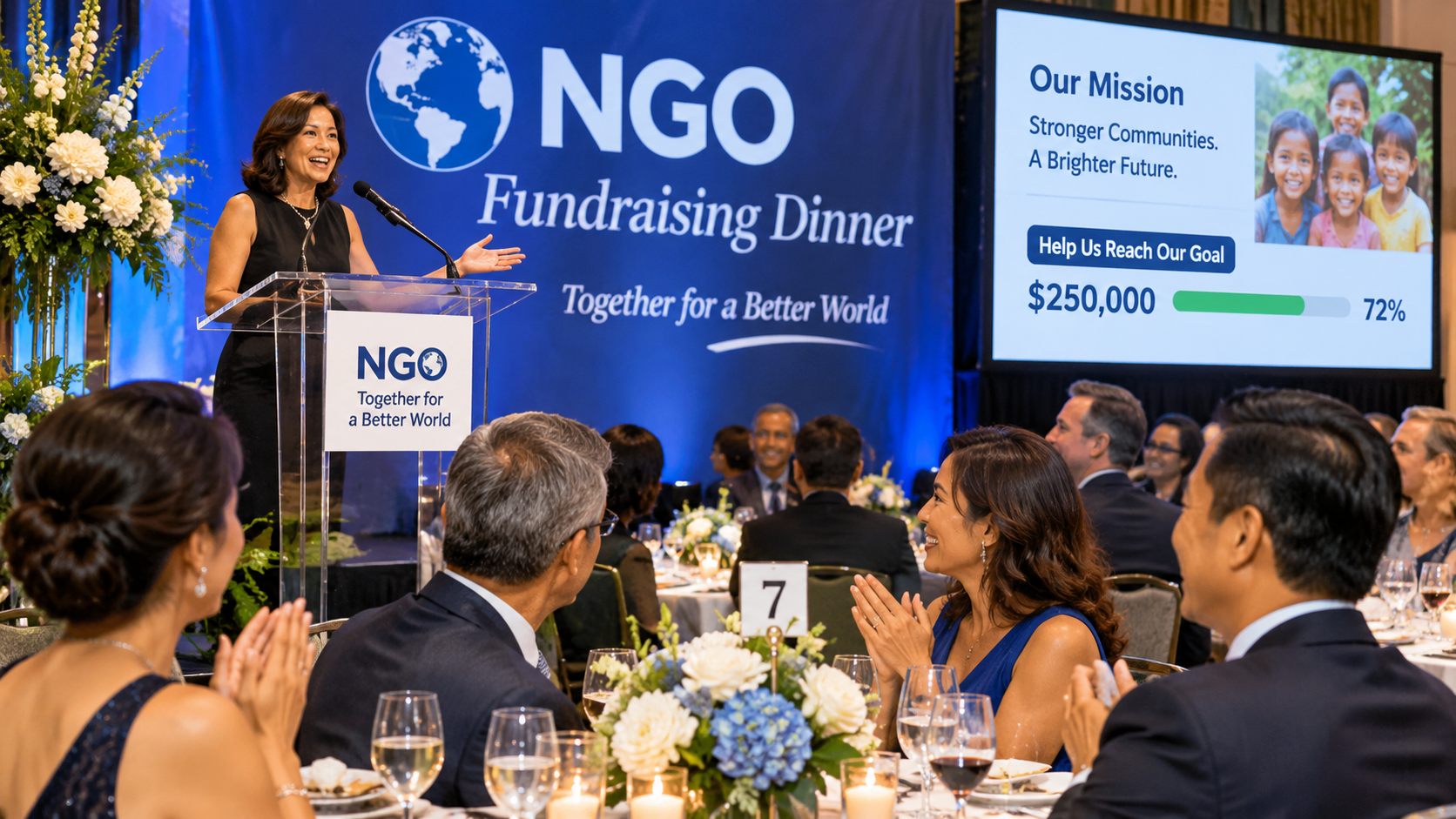
Usually done as a fundraising dinner, a gala event can generate substantial amounts of unrestricted income in a night of pledges, auctions and sundry table sales. As an example, a well-established nonprofit in Hong Kong averages HKD 10-13 million in 4 hours during its annual gala dinners. Less expenses of approximately half a million, net earnings are nothing short of phenomenal and make such events worth prioritizing as a fundraising strategy.
However, gala events are appropriate for well-established nonprofits that have built an extensive network of donors, partners and volunteers. It is not for relatively young NGOs that are still making their names known in the community and among other potential givers. The following requirements serve as a rough benchmark on whether fundraising dinners are appropriate for your nonprofit.
1) Donor Potential
The main criteria for assessing your nonprofit’s readiness to hold a gala event is sufficiency in the number of HNWIs and corporate partners that have donated at least once to your organization. A fundraising dinner is not a way to gather new donors, but a way to level up giving from existing ones. It is a nodal point in Cultivation and Ask, not a platform for the Discovery and Engagement phases of donor acquisition.
One should also look at the amounts potential guests have given historically to gauge whether they are worth inviting (not to be cynical, but this is a fundraiser). If you could find at least a hundred such people in your CRM’s donor database, then you have a critical mass of gala attendees. It is always a plus in the guest vetting process if an HNWI is likely to invite other wealthy friends, and a good indicator is their purchase of an entire table. With corporates, however, this practice will more likely end up in filling the table with employees who have little or no capacity to donate the amounts gala dinners are targeting.
2) Staff and Volunteering Capacity
Any fundraising event needs manpower, and a gala dinner even more so. Nonprofits that have staffing north of 15 people may be able to afford a gala, assuming that least half of them can be spared. Given that NGOs are always short on staff and are committed to multitasking, this minimum requirement may still be inadequate, even with the inclusion of some Board members.
A force multiplier in this game is the mobilization of volunteers from among your network, granted that your partnership efforts have matured towards that depth and breadth. Offhand, these may come from tertiary schools, churches, corporates, and other nonprofits. Based on their skills or preference, the volunteers may be assigned to the appropriate committees that are led by staff or Board members, and briefed or trained before the event. Committees may include the following: program, finance, logistics, table attendants, registration and auction prizes.
3) Availability of Co-Sponsors
These are your business partners, so to speak. They may provide pro bono services, venues or goods-in-kind that lower can greatly reduce your expenses, and consequently, increase your bottom-line. Many of these co-sponsors require something in exchange, such as promoting their products during the program, as they are usually businesses and are certainly mindful of ROI. Location being all-important but expensive, you may look for charity-minded hosting providers willing to provide your posh venue for free or at a huge discount, in exchange for their paid catering services on the night. Another likely partner is your auction platform company, which may not charge a fee but would probably ask for a certain percentage of payments from winning bidders of both silent and open auctions.
4) Cost-Benefit Analysis
As with any fundraising activity, one has to measure the ROI through a cost-benefit analysis. Here income projections can be tricky, especially if the giving capacity of guests have not been accurately predicted. Even if you have a hundred HNWIs in the room but your pitches and the room atmosphere are too laidback, they will only give a fraction of what you expect. The most successful nonprofits holding gala dinners have been those that invested heavily in filling the room with energy and emotive content to open their guests’ wallets, rather than simply ticking off ROI and impact numbers to appeal to the donors’ business sense.
It is not unusual to have the 20-26x return on capital in my above example (which actually happened), but I’ve also seen an instance where HKD 6 million gross was expected on a budget of HKD 380,000 but the event reaped only HKD 2 million gross, way below the target. It still turned a nice profit in monetary terms, but when one considers the time spent by staff (including the fundraiser and the CEO) and the optional hiring of an event organizer, the bottom-line further decreases and doubts creep in on whether the event was worth it or not. With a preparation period of at least six months prior, most nonprofits can only afford to hold one gala event each year and it has to count big time. A capital return of no less than 10x should be expected to make it worth the trouble.
To Gala or Not
Having determined that the above criteria can be met, the fundraiser can work out the details with the CEO and help pitch the gala event to the Board. Since nonprofits are big believers of working Boards, having their full support can be an enormous factor in its success and help prevent scapegoating when the gala income falls short of the target.
Despite the daunting scale of preparations, annual fundraising dinners can be a windfall source of unrestricted income that can be ploughed back into reserves for the rainy days, or used right away if funding deficits already exist. It is best treated as a fast-track method of offsetting the slow pace of grant approvals or tranche releases and filling in gaps in the budget. But it remains a gamble even in the best of times, and NGOs should focus primarily on fundraising strategies that are more reliable and less resource-intensive for subsidizing their core expenses.