
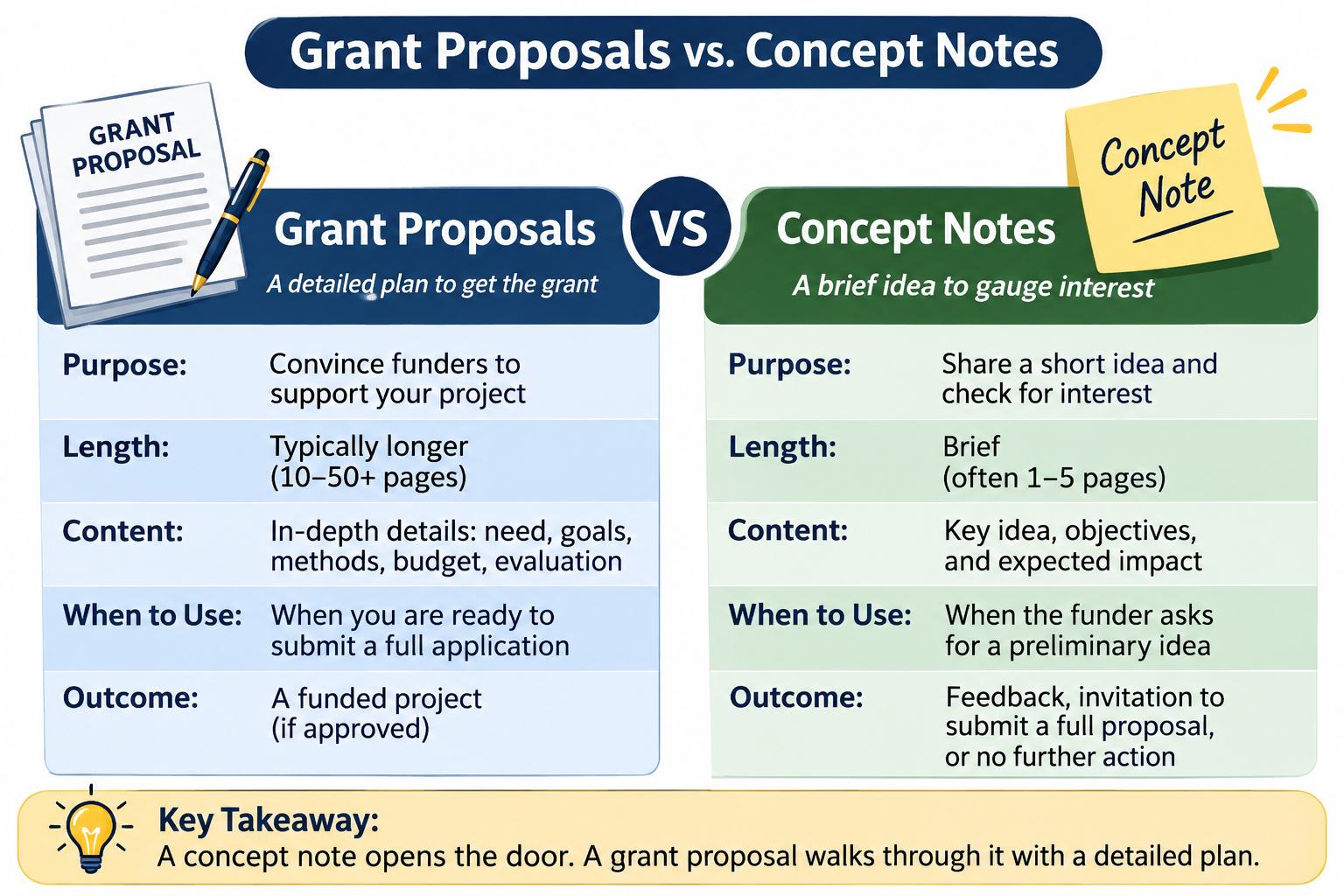
Some nonprofit CEOs have the habit of conflating concept notes and full proposals, whereas the two are distinct instruments in grant development. They would ask about the status of a prospective donor under cultivation, and think a concept note submission should be already be noted in the Profit & Loss (P&L) spreadsheet. This betrays impatience and a lack of understanding of the donor acquisition process.
A concept note (in some countries, Letter of Intent or LOI) is essentially a marketing material, a 1-2 page “elevator pitch” to potential donors that introduces your organization, its overall impact, the program (or project) you want them to fund, and the corresponding amount of funding needed. You might have talked to a prospective donor in a gathering, but he/she wants to know more about who you are, what you do and whether funding your nonprofit makes for good ROI. Then your concept note is exactly what you need as a follow up communication instrument.
In this case, if you submit a 10-page full proposal right away using your own template, then you may just have crippled your chances of being funded by that giver. A proper proposal will include a more detailed presentation of everything a concept note contains, plus a budget breakdown and other relevant sections. Unless a potential donor is also a grant reviewer, he/she will have a hard time devoting that much time reading your longish document, which means it will not move forward fast enough (if at all).
Corporate executives are especially squeezed for time, so a 1-page concept note is all the attention they could afford away from piles of company reports they need to look at. But once they are hooked by your 1-pager, they will most likely recommend your note to the CSR department or their corporate foundation which will then ask for a full proposal. If the grant or donation is restricted to a program, it will become the basis of a contract signed by both parties. Concept notes are usually not allowed that legal recognition.
Nonprofit leaders are front-facing people who place a lot of value in verbal exchanges and may be forgiven for thinking concept notes carry enough weight to deliver the goods, so to speak. This may be because some donors give on a personal basis and only require concept notes and invoices for tax deduction purposes, but these are for small donations. Sizeable grants from established foundations require full-fat proposals, and until your nonprofit receives the signed contract, keep those allocation amounts away from your P&L sheets.